



![]() |
|
|
||||||||||||
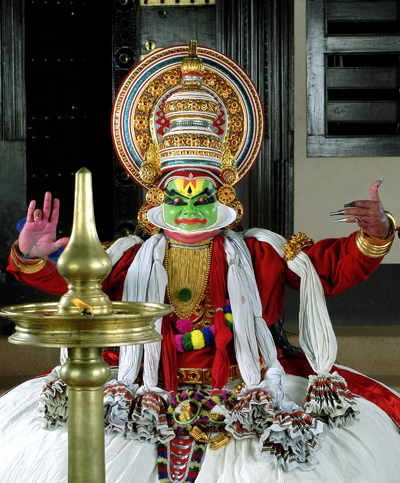
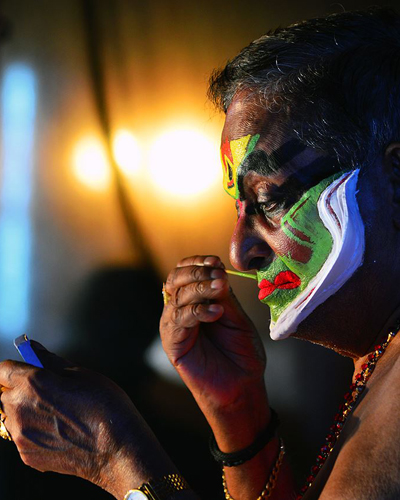
Training The kathakali actor has an entire language in dance which includes all the possibilities of odily expression, from the most subtle to the most spectacular. His hands are his words, his face and eyes are his emotions, and the movements of his body are the punctuation and poetry of his sentences. The artists devoted themselves to the training with an ever increasing intensity. The Training procedure starts early in the morning. Training includes: Meisadhakam, Kaal sadhakam, Uzhichil, Chuzhippu, Todayam, Purappad and Kalasam. |
![]() |
|||||||||||||
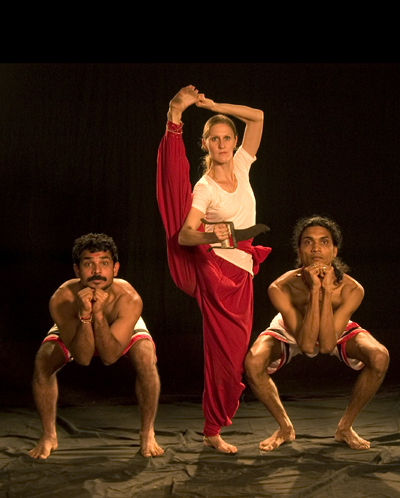
Meisadhakam The meisadhakam consists of the namaskarapanchaka (prostration in five ways). This involves a lot of bodily action - jumping with articulated steps, shifting the position of the legs, swinging the legs back and around, moving the hips laterally, stooping and stretching the body, pressing the body against the floor corner, lowering the body, stamping the feet, upturning the body by swinging hands, somersaulting along a circular path on the floor and jumping and moving the arms in circles. |
||||||||||||||
![]() |
![]() |
![]() |
||||||||||||
Kaal sadhakam The steps are practise in the chempada and panchari rhythms, in four tempos. By this time, the disciple is prone to sweat profusely. This is the snehasveda treatment. The body is now ready for the uzhichil, which is also a part of Ayurveda treatment. |
||||||||||||||
|
Uzhichil |
![]() |
|||||||||||||
|
|
![]() |
|||||||||||||
Todayam This is a pure dance item by incompletely dressed performers accompanied by an invocatory song, several kalasams are rendered behind the curtain in different rhythms and tempos. The junior disciples practise todayam and purappad and the seniors cholliyattom. |
||||||||||||||
Purappad This is the most formal entry of the principal character of the play, presented in a highly stylized manner. The singers render a song in four parts extolling the qualities of the principal character. After each part is sung, the performers representing the principal character and his consort execute stylized dances. The purappad commences with dances behind the curtain with the performer paying obeisance; then in the first look, with the curtain lowered half-way, the performer uses eye movements, then upper part of the body, then entire body and finally the full-fledged dance. |
||||||||||||||
![]() |
![]() |
![]() |
||||||||||||